Social Security
A recent study shows Americans value Social Security (SS) and see it as the "cornerstone of retirement security." In short the message to politicians is "hands off our Social Security" benefits.
The Old Age & Survivors Trust Fund – one of two Trust Funds in Social Security (SS), the other being the Disability Insurance Trust Fund, provides retirement, survivor, dependent and spousal benefits for almost 58 million Americans – approximately 166,000 of whom live within the 10th Congressional District.
The Problem: The SS System Is in Financial Trouble
Last year the SS Trustees said they expect the SS Trust Fund to be depleted by 2033 which would trigger an automatic 23% reduction in benefits. A recent update by the Congressional Budget Office projects the SS Trust Fund will now be depleted by 2032 – a full year sooner than the SS Trustees' projection.
A scenario: It's 2032, you're on SS collecting $2,000/month, but then the automatic reductions kick in. You just went from collecting $2,000/month to $1,520/month – a loss of $480/month in income.
Now consider just over 50% of Americans don't have ANY retirement savings and one quickly understands why SS is so important – it provides a safety net – a stream of guaranteed income and in some cases the only stream of income to those with limited to no retirement savings.
Politicians who make a promise of "not touching SS" during a campaign are really telling you "I'm not going to do anything to fix the impending insolvency crisis – that's someone else's problem to fix."
How Social Security Works
SS was meant to be self-sustaining meaning the money coming in to the SS trust fund from payroll taxes every month plus any interest on the existing trust fund balance would equal or exceed the amount of money going out every month to Social Security beneficiaries.
Think of SS like a bucket with a hole in it. Workers, through their taxes, pour money into the bucket and that same money flows out in the form of SS checks to beneficiaries. It is not an individual account. All the taxes you paid, while working, didn't go into some personal savings account with your name on it. Workers today are essentially paying for current retirees' benefits with the expectation that future workers will pay your benefits when you retire.
What's Causing the Problem?
There is more money flowing out of the bucket every month than is being put into it so the bucket is starting to run dry.
- The Republicans' "One Big Beautiful Bill Act" signed in 2025 reduced the amount of tax funds flowing into the Trust Fund which is the primary reason it will be depleted by 2032 vs 2033.
- We have an aging population so more people are collecting benefits than in the past. In simple terms, the bucket is being asked to pour out faster and faster, while fewer and fewer people are refilling it from the top.
- People are living longer so they are collecting benefits longer. When SS was first signed into law in 1935 life expectancy for a man was 60 years old. Today it is 76.
- The USA has a declining birthrate meaning there are fewer workers paying into the system. When SS was first signed into law in 1935 there were 10 workers paying SS taxes for every person collecting benefits. By 1960, the ratio had shrunk to 5 to 1 and today it is 2.7 to 1.
The solution seems simple: Raise the amount of money going into the SS Trust Fund each month OR reduce the amount each beneficiary receives each month OR a combination of the two. While this seems easy and logical ANY solution is considered political suicide because someone – usually a block of voters – loses out.
Possible Solutions
1. Increase Revenue
[warning – the following gets a little geeky]
a) Raise FICA taxes: The current FICA tax rate is 15.3% of wages, split between employers and employees. Employees pay 7.65% (6.2% for Social Security and 1.45% for Medicare), while employers match this 7.65%. Increasing the FICA tax rate would increase the amount of money in the trust fund extending its viability – the higher the tax, the longer the fund's viability. For example, raising the FICA taxes by 2.5%, without doing anything else, would make the trust fund viable until 2052, but someone making $65K/year would end up paying an additional $812 in FICA taxes each year or approximately $16 more a week – in short, less money for other things... like groceries, utilities, health insurance, etc.
b) Raise the tax cap: FICA taxes only apply to the first $184,500 – none after that. That equates to about 83% of all wages today. Just raising the cap, without doing anything else, to $350,000 (90% of all wages today) would increase the amount of money going into the SS trust fund and keep it viable until 2038. Eliminating the cap altogether (100% of all wages) would keep the fund viable until 2055. For high earners this would be a massive tax hike unacceptable to Republicans who want to keep top-end tax rates low as well as for Democrats who rely on upper middle income earners for support who would also be hit with a tax increase.
c) Broaden the tax base: This means making people pay FICA taxes who currently do not have to pay this tax. Many state and government employees fall into this category. Another option to increase the tax base is to apply FICA taxes to that portion of an employee's earnings that are currently exempt from paying the tax on, such as for flexible savings plans, daycare premiums, and group health insurance premium payments. Broadening the tax base would increase SS' viability from two to six years (out to 2042).
d) Tax Social Security benefits: Instead of eliminating federal income taxes on SS benefits under a certain amount as the "One Big Beautiful Bill" temporarily does until 2028 (hmmm... after the 2028 Presidential election) this would tax all SS benefits in excess of worker payroll tax contributions. Doing this option adds, at most, a year or two to SS' viability.
e) Combine the OASI Trust Fund with the Disability Trust Fund: Both Trust Funds are funded through the same 12.4% payroll tax split between employee and employer, but they are legally separate Trust Funds and cannot be combined or used to finance the other without an act from Congress. The Disability Trust Fund is in much better shape. This solution adds two years to SS solvency, then automatic reductions in benefits would kick in.
2. Cut Benefits
a) Reduce initial benefits: Just tell beneficiaries their benefits are being cut by some number (e.g. a 5% cut). The deeper the cut the longer the SS Trust Fund remains viable. For example a deep cut now of 30% still results in another needed 11% cut in 2036 to keep the fund viable. No one on SS would like to see their benefits cut – especially those on fixed incomes.
b) Slow initial benefits or phase out benefits to the wealthy: This involves using different formulas and percentages for calculating the amount of benefits someone is entitled to based on their average lifetime earnings [BTW if you want to see your lifetime earnings set up a My Social Security Account on the web]. Those making a lot of money over their lifetimes would see a reduction in their benefits while those with lower lifetime earnings wouldn't see a significant loss in benefits. This does not resolve the SS Trust Fund's viability but does reduce how deep the cuts will have to be.
c) Increase the retirement age: Now here is a real hot potato. Does anyone recall the mass protests, widespread strikes, and violent clashes that occurred in France after the President raised the retirement age from 62 to 64? It got ugly. The current "Full Retirement Age" in the USA is 67. Yes, you can retire earlier, but of course the amount of money each month would be substantially less. Proposals range from raising the full retirement age from its current 67 to 68, 69 or 70 or indexing it based on life expectancy. Of course those currently in the workforce don't want to wait longer to retire with full benefits.
d) Modify the Cost of Living Adjustments (COLA): Instead of providing an annual increase to premiums based on the Consumer Price Index for Urban Wage Earners and Clerical Workers use some other Index. Using a different index reduces the amount of benefits cut in 2034, but there are still cuts which are unpalatable to beneficiaries.
3. A Combination Approach
This is likely the best political solution and the one most palatable to beneficiaries and soon-to-be beneficiaries.
4. Use General Tax Revenues
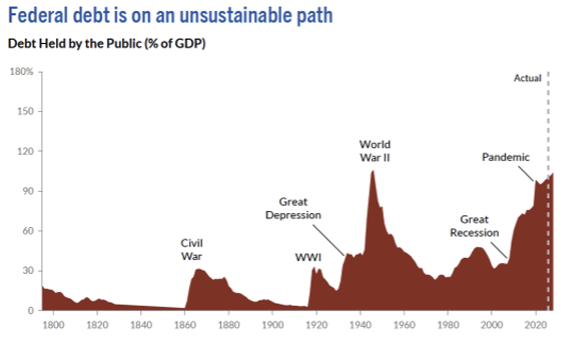
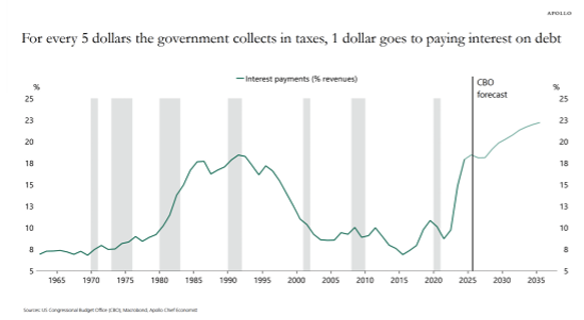
This is not a very good solution either as Congress has engaged in deficit spending for years causing the current national debt to exceed $39T, with interest on that debt now costing the nation more each year than it is paying for Medicare – and soon, unless action is taken, more than the government is paying for Social Security. Using general tax revenues would worsen our fiscal condition, not make it better.
5. Privatize Social Security
Just give everyone all the money they put into Social Security over the years and let each person invest it themselves – get the government out of providing old age and survivors benefits altogether. This is a solution that is always being pitched by Wall Street and Private Equity firms. They'd love to get their hands on your money. Such a solution might work for those that are financially savvy, but for many others it could spell financial ruin and a loss of a guaranteed income for retirees.
The Stakes for District 10
One of the roles of Government is to protect and provide assistance to its people. Today many retirees on fixed incomes in the 10th US District are just one bill, one emergency away from ruin. Private charity sources are inadequate for their needs. If Social Security benefits are reduced, a result of Congress' continued inaction, many current and future retirees in the 10th Congressional District would face incredibly difficult situations. We don't need to eliminate Social Security, we need to fix it – Congress was aware of the problem in 1983 and made changes to the program, but were not fully implemented until 2022.
Jan's Plan of Action
If elected to Congress my goal is to keep Social Security viable and sustainable for the future and avoid any sudden changes that would have an adverse effect on beneficiaries. I will:
- Oppose any cuts in benefits
- Support lifting the income cap
- Support a gradual phase-in of a higher full retirement age
- Support any legislation which encourages workers to save for retirement including automatically opting-in to 401K, 403b, profit-sharing plans and IRAs
- Review, and then possibly establish and gradually phase in a Collective Defined Contribution (CDC) Plan similar to those used in the Netherlands and the UK. A CDC is a type of retirement savings plan that combines elements of pension and 401k/403b plans and where the workers AND employers contribute money into a shared investment fund, rather than individual accounts. Retirement income is based on the overall performance of the pooled funds vs a defined amount. The account could be managed by financial professionals not associated with the company where people work, while the government provides the legal framework and oversight authority but no external guarantee.


Jan Kinner's Social Security Policy
×Social Security
A recent study shows Americans value Social Security (SS) and see it as the "cornerstone of retirement security." In short the message to politicians is "hands off our Social Security" benefits.
The Old Age & Survivors Trust Fund – one of two Trust Funds in Social Security (SS), the other being the Disability Insurance Trust Fund, provides retirement, survivor, dependent and spousal benefits for almost 58 million Americans – approximately 166,000 of whom live within the 10th Congressional District.
The Problem: The SS System Is in Financial Trouble
Last year the SS Trustees said they expect the SS Trust Fund to be depleted by 2033 which would trigger an automatic 23% reduction in benefits. A recent update by the Congressional Budget Office projects the SS Trust Fund will now be depleted by 2032 – a full year sooner than the SS Trustees' projection.
A scenario: It's 2032, you're on SS collecting $2,000/month, but then the automatic reductions kick in. You just went from collecting $2,000/month to $1,520/month – a loss of $480/month in income.
Now consider just over 50% of Americans don't have ANY retirement savings and one quickly understands why SS is so important – it provides a safety net – a stream of guaranteed income and in some cases the only stream of income to those with limited to no retirement savings.
Politicians who make a promise of "not touching SS" during a campaign are really telling you "I'm not going to do anything to fix the impending insolvency crisis – that's someone else's problem to fix."
How Social Security Works
SS was meant to be self-sustaining meaning the money coming in to the SS trust fund from payroll taxes every month plus any interest on the existing trust fund balance would equal or exceed the amount of money going out every month to Social Security beneficiaries.
Think of SS like a bucket with a hole in it. Workers, through their taxes, pour money into the bucket and that same money flows out in the form of SS checks to beneficiaries. It is not an individual account. All the taxes you paid, while working, didn't go into some personal savings account with your name on it. Workers today are essentially paying for current retirees' benefits with the expectation that future workers will pay your benefits when you retire.
What's Causing the Problem?
There is more money flowing out of the bucket every month than is being put into it so the bucket is starting to run dry.
The solution seems simple: Raise the amount of money going into the SS Trust Fund each month OR reduce the amount each beneficiary receives each month OR a combination of the two. While this seems easy and logical ANY solution is considered political suicide because someone – usually a block of voters – loses out.
Possible Solutions
1. Increase Revenue
[warning – the following gets a little geeky]
a) Raise FICA taxes: The current FICA tax rate is 15.3% of wages, split between employers and employees. Employees pay 7.65% (6.2% for Social Security and 1.45% for Medicare), while employers match this 7.65%. Increasing the FICA tax rate would increase the amount of money in the trust fund extending its viability – the higher the tax, the longer the fund's viability. For example, raising the FICA taxes by 2.5%, without doing anything else, would make the trust fund viable until 2052, but someone making $65K/year would end up paying an additional $812 in FICA taxes each year or approximately $16 more a week – in short, less money for other things... like groceries, utilities, health insurance, etc.
b) Raise the tax cap: FICA taxes only apply to the first $184,500 – none after that. That equates to about 83% of all wages today. Just raising the cap, without doing anything else, to $350,000 (90% of all wages today) would increase the amount of money going into the SS trust fund and keep it viable until 2038. Eliminating the cap altogether (100% of all wages) would keep the fund viable until 2055. For high earners this would be a massive tax hike unacceptable to Republicans who want to keep top-end tax rates low as well as for Democrats who rely on upper middle income earners for support who would also be hit with a tax increase.
c) Broaden the tax base: This means making people pay FICA taxes who currently do not have to pay this tax. Many state and government employees fall into this category. Another option to increase the tax base is to apply FICA taxes to that portion of an employee's earnings that are currently exempt from paying the tax on, such as for flexible savings plans, daycare premiums, and group health insurance premium payments. Broadening the tax base would increase SS' viability from two to six years (out to 2042).
d) Tax Social Security benefits: Instead of eliminating federal income taxes on SS benefits under a certain amount as the "One Big Beautiful Bill" temporarily does until 2028 (hmmm... after the 2028 Presidential election) this would tax all SS benefits in excess of worker payroll tax contributions. Doing this option adds, at most, a year or two to SS' viability.
e) Combine the OASI Trust Fund with the Disability Trust Fund: Both Trust Funds are funded through the same 12.4% payroll tax split between employee and employer, but they are legally separate Trust Funds and cannot be combined or used to finance the other without an act from Congress. The Disability Trust Fund is in much better shape. This solution adds two years to SS solvency, then automatic reductions in benefits would kick in.
2. Cut Benefits
a) Reduce initial benefits: Just tell beneficiaries their benefits are being cut by some number (e.g. a 5% cut). The deeper the cut the longer the SS Trust Fund remains viable. For example a deep cut now of 30% still results in another needed 11% cut in 2036 to keep the fund viable. No one on SS would like to see their benefits cut – especially those on fixed incomes.
b) Slow initial benefits or phase out benefits to the wealthy: This involves using different formulas and percentages for calculating the amount of benefits someone is entitled to based on their average lifetime earnings [BTW if you want to see your lifetime earnings set up a My Social Security Account on the web]. Those making a lot of money over their lifetimes would see a reduction in their benefits while those with lower lifetime earnings wouldn't see a significant loss in benefits. This does not resolve the SS Trust Fund's viability but does reduce how deep the cuts will have to be.
c) Increase the retirement age: Now here is a real hot potato. Does anyone recall the mass protests, widespread strikes, and violent clashes that occurred in France after the President raised the retirement age from 62 to 64? It got ugly. The current "Full Retirement Age" in the USA is 67. Yes, you can retire earlier, but of course the amount of money each month would be substantially less. Proposals range from raising the full retirement age from its current 67 to 68, 69 or 70 or indexing it based on life expectancy. Of course those currently in the workforce don't want to wait longer to retire with full benefits.
d) Modify the Cost of Living Adjustments (COLA): Instead of providing an annual increase to premiums based on the Consumer Price Index for Urban Wage Earners and Clerical Workers use some other Index. Using a different index reduces the amount of benefits cut in 2034, but there are still cuts which are unpalatable to beneficiaries.
3. A Combination Approach
This is likely the best political solution and the one most palatable to beneficiaries and soon-to-be beneficiaries.
4. Use General Tax Revenues
This is not a very good solution either as Congress has engaged in deficit spending for years causing the current national debt to exceed $39T, with interest on that debt now costing the nation more each year than it is paying for Medicare – and soon, unless action is taken, more than the government is paying for Social Security. Using general tax revenues would worsen our fiscal condition, not make it better.
5. Privatize Social Security
Just give everyone all the money they put into Social Security over the years and let each person invest it themselves – get the government out of providing old age and survivors benefits altogether. This is a solution that is always being pitched by Wall Street and Private Equity firms. They'd love to get their hands on your money. Such a solution might work for those that are financially savvy, but for many others it could spell financial ruin and a loss of a guaranteed income for retirees.
The Stakes for District 10
One of the roles of Government is to protect and provide assistance to its people. Today many retirees on fixed incomes in the 10th US District are just one bill, one emergency away from ruin. Private charity sources are inadequate for their needs. If Social Security benefits are reduced, a result of Congress' continued inaction, many current and future retirees in the 10th Congressional District would face incredibly difficult situations. We don't need to eliminate Social Security, we need to fix it – Congress was aware of the problem in 1983 and made changes to the program, but were not fully implemented until 2022.
Jan's Plan of Action
If elected to Congress my goal is to keep Social Security viable and sustainable for the future and avoid any sudden changes that would have an adverse effect on beneficiaries. I will: